The Growth Click

The Growth Click: A Guide to Business Growth

Introduction

The Growth Click is about using smart digital marketing strategies to help businesses grow online. In today’s digital world, businesses need a strong online presence to reach customers and increase their sales. Digital marketing methods such as Search Engine Optimization (SEO), social media marketing, content marketing, and paid advertising can help businesses achieve their goals.

Business growth requires proper planning, creative ideas, and a clear understanding of customer needs. By creating valuable content, promoting products on social media, and analyzing marketing performance, businesses can attract new customers and build long-term relationships.

Important Points for Business Growth

1. Build a Strong Online Presence

Create a professional website and business profiles on relevant social media platforms.

Example: A small clothing shop creates a website and an Instagram page to showcase its products.

2. Use Search Engine Optimization (SEO)

SEO helps a website appear in relevant search engine results and attract visitors.

Example: A bakery uses relevant keywords such as “custom cakes near me” on its website.

3. Create Quality Content

Share useful, interesting, and informative content to attract your target audience.

Example: A digital marketing agency publishes blogs about SEO tips and social media strategies.

4. Promote Your Business on Social Media

Use platforms such as Instagram, Facebook, and LinkedIn to connect with potential customers.

Example: A beauty brand shares product demonstrations and customer reviews on Instagram.

5. Understand Your Target Audience

Learn about your customers’ interests, needs, and preferences to create better marketing campaigns.

Example: A sports shop promotes sports shoes to people interested in fitness and outdoor activities.

6. Track Marketing Performance

Analyze website visits, engagement, leads, and sales to understand which strategies work best.

Example: A business checks its Instagram insights to find which posts receive the most engagement.

Benefits of The Growth Click

  • Increases brand awareness.
  • Helps attract potential customers.
  • Improves website traffic.
  • Builds customer trust.
  • Supports business growth.
  • Helps improve marketing strategies.
  • Creates opportunities to increase sales.

Real-Life Example

Imagine a digital marketing agency called Gate Tech wants to grow its business. The agency creates a professional website, publishes SEO blogs, shares informative Instagram reels, and runs targeted online advertisements.

By regularly checking website traffic and customer responses, Gate Tech can understand which marketing activities are successful and improve its strategy over time.

Conclusion

The Growth Click represents the moment when the right marketing strategy helps a business move forward. By combining SEO, social media marketing, quality content, and performance analysis, businesses can strengthen their online presence and work toward sustainable growth.

Social Marketing

v

Social Media Marketing: A Complete Guide

Introduction

Social Media Marketing (SMM) is a digital marketing strategy that uses social media platforms to promote products, services, and businesses. Popular platforms include Instagram, Facebook, YouTube, LinkedIn, and Pinterest. Businesses use social media to connect with customers, share useful content, increase brand awareness, and attract new customers.

Social media marketing helps businesses reach a large audience and communicate directly with people. By posting photos, videos, reels, stories, and advertisements, businesses can build trust and grow their online presence.

Types of Social Media Marketing

1. Content Marketing

Content marketing involves sharing useful and interesting content on social media platforms.

Example: A clothing brand posts photos of its latest collection on Instagram.

2. Influencer Marketing

Influencer marketing involves working with content creators who promote products or services to their followers.

Example: A fashion influencer creates a reel wearing a dress from a clothing brand.

3. Paid Social Media Advertising

Businesses pay social media platforms to display advertisements to selected audiences.

Example: A digital marketing agency runs an Instagram advertisement to promote its website design services.

4. Organic Social Media Marketing

Organic marketing involves posting content without paying for advertisements.

Example: A bakery shares cake photos, baking videos, and customer reviews on Facebook.

Benefits of Social Media Marketing

  • Brand Awareness: Helps more people discover your business.
  • Customer Engagement: Allows businesses to communicate with their audience.
  • Website Traffic: Encourages people to visit your website.
  • Lead Generation: Helps attract potential customers.
  • Cost-Effective Promotion: Organic posts can promote a business without advertising costs.
  • Business Growth: Helps businesses build relationships and find new opportunities.

Important Social Media Marketing Tips

  1. Choose the right social media platforms for your audience.
  2. Post high-quality photos and videos.
  3. Use relevant hashtags and keywords.
  4. Share content regularly.
  5. Reply to comments and messages.
  6. Create engaging reels and stories.
  7. Track likes, shares, comments, reach, and clicks.
  8. Use paid advertisements when they suit your goals.

Real-Life Example

Imagine you own a digital marketing agency called Gate Tech. You create an Instagram business account and regularly post digital marketing tips, website designs, SEO information, and client success stories.

You also share reels explaining how businesses can grow online. People who find your content useful may visit your website, contact your agency, and become customers.

This is an example of how social media marketing can help a business increase brand awareness and reach potential customers.

Conclusion

Social Media Marketing is an important part of digital marketing. It helps businesses connect with their audience, promote their services, and build a strong online presence. With creative content, regular posting, and proper planning, businesses can use social media to achieve their marketing goals and grow successfully.

SEO & Rankings

SEO & Rankings

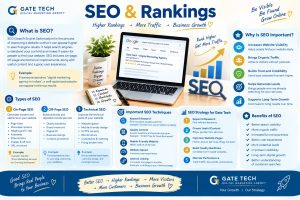
SEO stands for Search Engine Optimization. It is one of the most important parts of digital marketing. SEO helps a website appear higher in search engine results when people search for information, products, or services online. Search engines such as Google use different factors to understand websites and decide which pages should appear in search results. A good SEO strategy helps businesses improve their online visibility, attract the right audience, increase website traffic, build trust, and generate potential customers.

What is SEO?

SEO is the process of improving a website so that search engines can understand its content and users can easily find it.

Example:

Suppose a person searches Google for:

“Digital Marketing Agency in Indore”

If a digital marketing company has properly optimized its website for this topic, its website may have a better opportunity to appear in relevant search results.

SEO is not only about using keywords. It also includes creating useful content, improving website speed, making the website mobile-friendly, building quality links, and providing a good user experience.

What are Search Engine Rankings?

Search engine ranking refers to the position of a website or webpage in search results.

For example:

  1. Website A – Position 1
  2. Website B – Position 2
  3. Website C – Position 3
  4. Website D – Position 4

Generally, websites appearing near the top can receive more attention and clicks, although the exact results depend on the search query and many other factors.

Example:

If someone searches “best SEO tips for beginners”, a page appearing near the top of the results may receive more visitors than a page appearing much lower.

Why is SEO Important?

1. Increases Website Visibility

SEO helps your website become easier for people to discover through search engines.

Example:
A bakery can optimize its website for “best bakery in Indore” so that people searching for bakeries can discover its website.

2. Brings Organic Traffic

Organic traffic means visitors who reach your website through unpaid search results.

Example:
Someone searches “how to create a business website”, finds your blog in the search results, and visits your website.

3. Builds Trust and Credibility

Websites that provide useful, clear, and reliable information can create a stronger impression among users.

Example:
A digital marketing company that regularly publishes helpful articles about SEO, Google Ads, and social media marketing can demonstrate its knowledge.

4. Helps Generate Leads

SEO can bring people who are already searching for products or services related to your business.

Example:
A person searching for “SEO services for small businesses” may become a potential customer after visiting an SEO agency’s website.

5. Supports Long-Term Growth

SEO is a long-term digital marketing strategy. Creating useful content and improving a website consistently can support continued online visibility.

Types of SEO

1. On-Page SEO

On-page SEO means optimizing the content and elements present on your website.

Important elements include:

  • Page titles
  • Headings
  • Keywords
  • Meta descriptions
  • Website content
  • Images
  • Internal links
  • URL structure

Example:
For a page about email marketing, a suitable heading could be:

“Email Marketing Services for Growing Businesses”

2. Off-Page SEO

Off-page SEO includes activities performed outside your website to improve its authority and reputation.

Some activities include:

  • Quality backlinks
  • Brand mentions
  • Digital PR
  • Business listings
  • Content promotion

Example:
If a trusted website mentions and links to your digital marketing website, it can contribute to your website’s online authority.

3. Technical SEO

Technical SEO focuses on the technical parts of a website that help search engines crawl and understand it.

Important areas include:

  • Website loading speed
  • Mobile-friendly design
  • Secure HTTPS connection
  • Website structure
  • Crawlability
  • Indexing
  • Broken links

Example:
If a website takes too long to load, improving its performance can create a better experience for visitors.

Important SEO Techniques

Keyword Research

Keyword research means finding the words and phrases people use when searching online.

Examples:

  • Digital marketing services
  • SEO services
  • Social media marketing
  • Google Ads agency
  • Website development services

Keywords should be used naturally and should match the topic of the page.

Quality Content

Search engines and users need useful content. Good content should answer questions and provide real value.

Example:

A blog titled “10 SEO Tips for Small Businesses” can explain practical SEO tips in a simple way.

Mobile-Friendly Website

Many people use smartphones to browse the internet. A website should work properly on mobile phones, tablets, and computers.

Website Speed

A fast-loading website provides a better experience for visitors. Businesses should optimize images, code, and other website elements to improve performance.

Internal Linking

Internal links connect one page of your website to another.

Example:

A blog about SEO can link to your Digital Marketing Services page so readers can learn more about your services.

Example of an SEO Strategy for Gate Tech

Gate Tech can create an SEO strategy for its digital marketing website.

Step 1: Keyword Research

Find relevant keywords such as:

  • Digital Marketing Agency
  • SEO Services
  • Social Media Marketing
  • Google Ads Services
  • AI Marketing

Step 2: Create Useful Content

Publish blogs such as:

  • “What is SEO?”
  • “Benefits of Digital Marketing”
  • “How Social Media Marketing Helps Businesses”
  • “SEO Tips for Beginners”
  • “How AI is Changing Digital Marketing”

Step 3: Optimize Website Pages

Optimize the Home, About, Services, Blog, and Contact pages with relevant information and keywords.

Step 4: Build Quality Backlinks

Promote useful content and earn links from relevant and trustworthy websites.

Step 5: Monitor Performance

Track website traffic, search visibility, keywords, and conversions to understand what is working and where improvements are needed.

Benefits of SEO

  • Better search visibility
  • More organic traffic
  • Increased brand awareness
  • Better user experience
  • More potential leads
  • Improved online credibility
  • Long-term digital growth
  • Better understanding of customer searches

Conclusion

SEO and rankings play an important role in digital marketing. SEO helps businesses improve their websites and make their content easier to discover through search engines. A successful SEO strategy combines useful content, keyword research, technical improvements, mobile-friendly design, quality backlinks, and continuous performance monitoring. SEO takes time and requires consistent effort, but it can become a valuable long-term strategy for building a strong online presence.

At Gate Tech, we focus on creating SEO-friendly websites and content that help businesses reach the right audience, improve their online visibility, and build a stronger digital presence.

Better SEO → Better Visibi
Online Branding

Online Branding

Online branding is the process of creating and promoting a strong identity for a business on the internet. It helps people recognize a brand and understand what the business offers. In today’s digital world, having a good online presence is very important because customers often search for a business online before making a decision. Online branding includes a company’s website, social media profiles, logo, colors, content, advertisements, customer reviews, and overall communication style. A strong online brand helps a business look professional, build trust, attract customers, and stand out from competitors.

What is Online Branding?

Online branding means creating a consistent and positive image of a business across different digital platforms.

Example:
If a digital marketing company uses the same logo, colors, fonts, and professional style on its website, Instagram, Facebook, and advertisements, people can easily recognize the company.

Important Elements of Online Branding

1. Brand Logo

A logo is a visual symbol that represents a business. It helps customers recognize the brand.

Example:
Gate Tech can use a simple blue, white, and golden logo across its website and social media pages.

2. Brand Colors

Using consistent colors helps create a recognizable visual identity.

Example:
A digital marketing agency may use blue, white, and gold to create a professional and modern appearance.

3. Website

A professional website is an important part of online branding. It should clearly explain the company, its services, contact information, and benefits.

Example:
A website for Gate Tech can include:

  • Home
  • About Us
  • Services
  • Blog
  • Contact Us

4. Social Media Presence

Social media helps businesses communicate directly with their audience and promote their products or services.

Example:
Gate Tech can share Instagram posts about:

  • SEO tips
  • Social media marketing
  • AI marketing
  • Google Ads
  • Website design

5. Quality Content

Useful and engaging content helps a business communicate its knowledge and build trust.

Example:
A company can publish a blog titled “5 Digital Marketing Tips for Small Businesses.”

6. Customer Reviews

Positive reviews can improve a brand’s reputation and help new customers feel more confident.

Example:
A customer can write: “Gate Tech provided excellent digital marketing support and helped us improve our online presence.”

Benefits of Online Branding

  • Builds brand recognition.
  • Creates a professional image.
  • Builds customer trust.
  • Helps attract new customers.
  • Improves online visibility.
  • Helps businesses stand out from competitors.
  • Increases customer engagement.
  • Supports long-term business growth.
  • Creates a consistent brand identity.
  • Helps generate leads and sales.

How to Build a Strong Online Brand

Step 1: Understand Your Audience

First, understand who your customers are and what they need.

Example:
If your target audience is small business owners, your content should focus on affordable and useful digital marketing solutions.

Step 2: Create a Consistent Brand Identity

Use the same logo, colors, fonts, and communication style across different platforms.

Step 3: Build a Professional Website

Your website should be easy to navigate, mobile-friendly, attractive, and informative.

Step 4: Use Social Media

Choose social media platforms where your target audience is active and share useful content regularly.

Step 5: Create Valuable Content

Post blogs, videos, images, ti

Growth Marketing Guide

Growth Marketing Guide

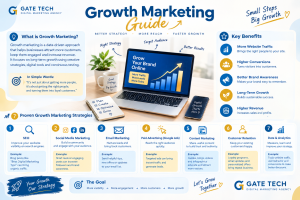
Growth Marketing is a data-driven approach that focuses on growing a business through continuous testing, learning, and improvement. Unlike traditional marketing, growth marketing looks at the complete customer journey, from attracting new visitors to converting them into customers and keeping them engaged. Businesses use different strategies such as SEO, social media,, content marketing, paid advertising, and customer feedback to achieve sustainable growth.

Important Points

  • Understand Your Audience: Learn about your customers, their needs, interests, and problems.
  • Create Valuable Content: Share useful blogs, videos, social media posts, and guides.
  • Use SEO: Optimize your website and content so people can easily find your business on search engines.
  • Social Media Marketing: Use platforms like Instagram, Facebook, and YouTube to reach and engage your audience.
  • Email Marketing: Send useful updates, offers, and information to existing customers.
  • Test Different Strategies: Try different headlines, advertisements, content, and landing pages to find what works best.
  • Analyze Data: Track visitors, clicks, engagement, leads, and conversions to understand your results.
  • Improve Customer Experience: Make websites and services simple, helpful, and easy to use.
  • Retain Customers: Build long-term relationships by providing good service and regular communication.

Examples

Continue reading→

Digital Marketing Daily

Digital Marketing Daily

Digital Marketing Daily is a useful source for learning about the latest trends, strategies, and updates in digital marketing. Digital marketing helps businesses promote their products and services through the internet. Today, companies use different online platforms such as Google, Instagram, Facebook, YouTube, websites, and email to reach their customers. By learning digital marketing regularly, beginners and professionals can improve their skills and understand how online businesses grow.

Important Points

  • SEO (Search Engine Optimization): Helps websites appear higher on Google search results.
  • Social Media Marketing: Promotes brands and products on platforms like Instagram, Facebook, and YouTube.
  • Content Marketing: Uses blogs, videos, posts, and other useful content to attract customers.
  • Email Marketing: Sends useful information, offers, and updates directly to customers through email.
  • Google Ads: Helps businesses show paid advertisements to people searching for related products or services.
  • Website Marketing: A professional website helps a business build trust and provide information to customers.
  • Analytics: Helps marketers understand website visitors, engagement, clicks, and conversions.

Examples

Example 1: A clothing brand can use Instagram reels to show its new collection and attract customers.

Example 2: A digital marketing agency can write SEO-friendly blogs to bring more visitors to its website.

Example 3: An online store can use Google Ads to show its products to people who are searching for them.

Example 4: A company can send email newsletters to inform customers about new products and special offers.

Conclusion

Digital marketing is continuously changing, so learning new strategies and trends every day is important. Digital Marketing Daily helps readers stay updated, learn practical techniques, and understand how businesses can use digital platforms to reach the right audience.

Blogging & Content

Blogging & Content

Blogging and Content are important parts of digital marketing. They help businesses share useful information, attract the right audience, build trust, and grow their online presence. In simple words, blogging means writing and publishing useful articles on a website, while content means all the information that a business creates and shares with its audience. Content can be in the form of blogs, social media posts, images, videos, emails, website pages, guides, and more.

What is Blogging?

Blogging means creating and publishing articles on a website. A blog can provide information, tips, ideas, news, solutions, or knowledge about a particular topic. Businesses use blogs to educate their audience and bring more visitors to their websites.

Example:

A digital marketing company can write a blog called:

“5 Easy Ways to Improve Your SEO”

In this blog, the company can explain five simple SEO techniques that businesses can use to improve their online visibility.

Benefits of Blogging

  • Helps bring more visitors to a website.
  • Provides useful information to customers.
  • Builds trust and credibility.
  • Supports SEO.
  • Helps improve online visibility.
  • Keeps the website fresh with new information.
  • Helps businesses connect with their audience.
  • Can generate potential customers.

What is Content?

Content is any information created and shared with an audience. Content can be written, visual, audio, or video-based. Businesses use different types of content to educate, inform, entertain, and promote their products or services.

Types of Content

  1. Blog Articles – Detailed articles about a specific topic.
  2. Social Media Posts – Short posts created for social media platforms.
  3. Images & Graphics – Visual information that attracts attention.
  4. Videos – Educational, promotional, or entertaining videos.
  5. Website Content – Text written for Home, About Us, Services, and other pages.
  6. Email Content – Information and offers sent to customers through email.
  7. Infographics – Information presented using graphics and simple points.
  8. Promotional Content – Content created to promote a product or service.

Example:

For a digital marketing company, content can include:

  • “What is Digital Marketing?”
  • “Benefits of Social Media Marketing”
  • “How Google Ads Can Help Your Business”
  • “Why Your Business Needs a Website”
  • “How AI is Changing Digital Marketing”

Why Blogging & Content Are Important

1. Increase Website Traffic

Good blogs can attract people who are searching for information online. When a blog provides useful answers, people may visit the website to read more.

Example:
A blog titled “Digital Marketing Tips for Small Businesses” can attract small business owners who want to learn about digital marketing.

2. Build Trust

Useful and informative content helps a business show its knowledge and experience. When customers regularly find helpful information, they may develop more trust in the brand.

Example:
A website design company can publish a blog explaining “How to Create a Professional Business Website.”

3. Improve SEO

Blogging can support Search Engine Optimization (SEO). Businesses can create content around topics and keywords that their target audience searches for.

Example:
A company offering SEO services can write an article about “SEO Services for Small Businesses.”

4. Increase Audience Engagement

Interesting content can encourage people to like, comment, share, save, or interact with a business.

Example:
A social media post titled “5 Digital Marketing Mistakes to Avoid” can encourage people to save and share the post.

5. Generate Leads

Content can help turn website visitors into potential customers. A blog can include a Call-to-Action (CTA) that encourages readers to contact the business.

Example:

“Need help with your digital marketing? Contact Gate Tech today!”

How to Create Good Content

Good content should be simple, useful, interesting, and relevant to the audience.

Important Points:

  • Understand your target audience.
  • Choose useful and relevant topics.
  • Create an attractive headline.
  • Use simple and clear language.
  • Use headings and subheadings.
  • Keep paragraphs easy to read.
  • Add relevant images or graphics.
  • Use keywords naturally.
  • Provide useful examples.
  • Add a clear Call-to-Action.
  • Check spelling and grammar before publishing.

Example of a Blogging Strategy

A business can create a weekly content plan.

Monday – Blog Article

Topic: “What is SEO?”

The article explains SEO and why it is important for businesses.

Wednesday – Social Media Post

Topic: “5 Benefits of SEO”

The main points from the blog can be converted into a short social media post.

Friday – Reel

Topic: “3 Digital Marketing Tips for Beginners”

A short video can explain three simple marketing tips.

Sunday – Educational Post

Topic: “SEO vs Google Ads”

The post can explain the basic difference between SEO and paid advertising.

This strategy helps businesses stay consistent and keep their audience engaged.

Blogging & Content for Gate Tech

At Gate Tech, we focus on creating useful, creative, and professional content for businesses. Our goal is to help brands communicate their message clearly and reach the right audience.

Our Content Services Include:

  • SEO Blog Writing
  • Website Content
  • Social Media Content
  • Marketing Articles
  • Email Content
  • Promotional Content
  • Educational Content
  • AI Marketing Content
  • Product and Service Descriptions
  • Content Strategy

Example of a Good Blog Structure

A good blog can follow a simple structure:

1. Title:
“What is Social Media Marketing?”

2. Introduction:
Briefly explain the topic.

3. Main Points:
Explain the important information using headings and points.

4. Examples:
Give simple real-world examples.

5. Benefits:
Explain how the topic can help the audience.

6. Conclusion:
Summarize the main idea.

7. Call-to-Action:
Tell the reader what they can do next.

Conclusion

Blogging and Content are powerful tools for modern digital marketing. They help businesses educate their audience, increase website traffic, improve SEO, build trust, increase engagement, and generate potential customers. Creating useful and consistent content can help a business develop a strong online presence.

At Gate Tech, we believe that good content informs, engaging content connects, and valuable content helps businesses grow. By creating the right content for the right audience and sharing it on the right platforms, businesses can build stronger relationships with customers and achieve long-term digital growth.

AI Marketing

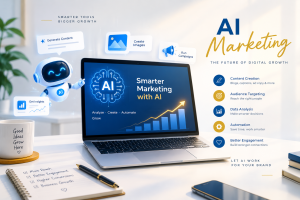
What is AI Marketing?

AI Marketing means using Artificial Intelligence (AI) to plan, create, automate, and improve marketing activities.

In simple words:

AI Marketing = Using AI to understand customers better and market products more effectively.

How AI is used in marketing

  • Customer analysis: AI studies customer behavior, interests, and purchasing patterns.

  • Personalization: It can show different products, messages, or offers to different customers.

  • Content creation: AI can help create advertisements, social-media posts, emails, product descriptions, and other marketing content.

  • Chatbots: AI-powered chatbots can answer customer questions and provide support 24/7.

  • Advertising optimization: AI can help determine which audiences, advertisements, and channels are producing the best results.

  • Predictive marketing: AI can predict things such as which customers are likely to purchase or stop using a service.

  • Email marketing: AI can help decide what message to send, to whom, and when.

  • Recommendation systems: AI can recommend products based on a customer’s previous activity.

Example

Imagine an online clothing store.

A customer frequently looks at running shoes but doesn’t buy them.

AI can recognize this behavior and help the company:

  1. Show the customer advertisements for running shoes.

  2. Recommend similar products.

  3. Send a personalized email with a relevant offer.

  4. Predict when the customer is most likely to purchase.

  5. Measure whether the advertisement resulted in a sale.

Traditional Marketing vs. AI Marketing

Traditional Marketing AI Marketing
Relies heavily on manual analysis Uses AI to analyze large amounts of data
Same message may reach many people Messages can be personalized
Campaign decisions can take longer AI can provide rapid insights
Manual customer segmentation Automated segmentation
Human-created content AI can assist with content creation
Limited prediction Can predict customer behavior

AI Marketing means using Artificial Intelligence (AI) to plan, create, automate, and improve marketing activities.

In simple words:

AI Marketing = Using AI to understand customers better and market products more effectively.

How AI is used in marketing

  • Customer analysis: AI studies customer behavior, interests, and purchasing patterns.

  • Personalization: It can show different products, messages, or offers to different customers.

  • Content creation: AI can help create advertisements, social-media posts, emails, product descriptions, and other marketing content.

  • Chatbots: AI-powered chatbots can answer customer questions and provide support 24/7.

  • Advertising optimization: AI can help determine which audiences, advertisements, and channels are producing the best results.

  • Predictive marketing: AI can predict things such as which customers are likely to purchase or stop using a service.

  • Email marketing: AI can help decide what message to send, to whom, and when.

  • Recommendation systems: AI can recommend products based on a customer’s previous activity.

Example

Continue reading→

Advertising strategies

What are Advertising Strategies?

Advertising strategies are plans businesses use to promote their products, services, or brand to the right audience and persuade people to take an action, such as buying something, visiting a website, or remembering the brand.

Common advertising strategies

Continue reading→